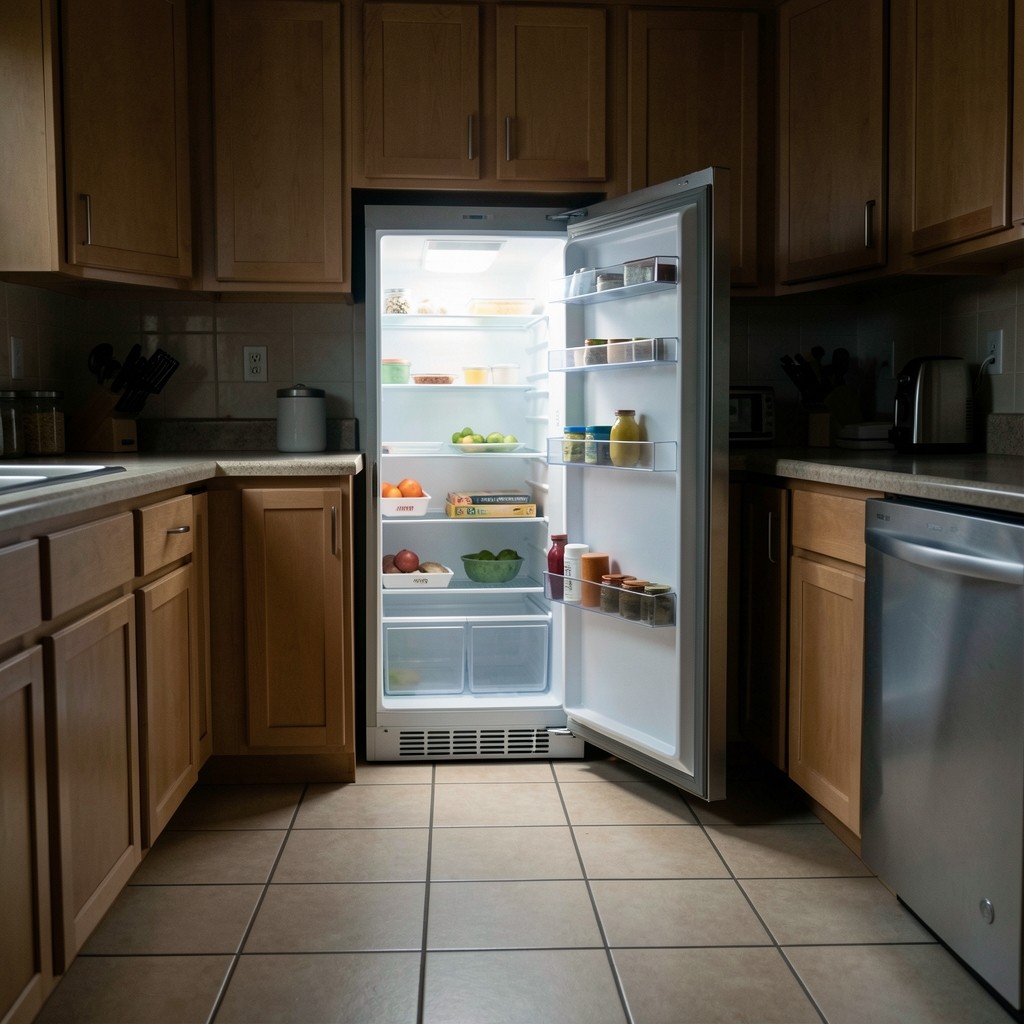
Weekend eating patterns are not simply a relaxed version of weekday eating. They represent a distinct behavioural context, one in which the structural supports of the working day — fixed mealtimes, occupational routine, the social norms of workplace eating — are absent. What fills that absence is informative. Comfort food habits intensify. Habitual snacking migrates from predictable evening windows into the unscheduled afternoon. The food and mood connection becomes easier to observe precisely because the confounding structure of the week has been removed.
Why Weekends Diverge
The divergence between weekend eating patterns and weekday norms has been noted across multiple observational studies using food journalling methodology. The consistent finding is that energy intake increases over the weekend, and that the composition of what is eaten shifts toward foods associated with comfort food habits — higher in fat and refined carbohydrates, lower in fibre-dense produce.
The explanation is structural rather than motivational. People on weekdays operate within a schedule that organises eating around fixed points: a commute, a lunch break of defined duration, an evening return home. These temporal anchors act as informal constraints on eating frequency and occasion. The weekend removes most of them. Without those anchors, eating occasions multiply and eating without hunger becomes more common.
Stress and food interact differently on weekends, too. The stress profile of Saturday and Sunday differs from the working week: the acute stressors of deadlines and interpersonal obligations are typically reduced, but the anxiety associated with unstructured time — boredom, a sense of purposelessness, the social comparison triggered by leisure activities — can produce its own eating-relevant arousal state. Boredom eating, in particular, tends to be more prevalent in weekend reports than in weekday ones.
The Logic of Comfort Food
The phrase comfort food habits deserves examination. The word "comfort" accurately describes the functional role these foods play, but can obscure what is actually happening. Comfort foods — which vary by individual, culture, and biographical experience — are not comforting in the abstract. They are foods that carry associative weight from previous occasions: a specific context of wellbeing, warmth, social connection, or simple pleasure. The food is not intrinsically soothing; the eating episode reactivates a prior emotional state.
The food and mood connection here is one of conditioned association rather than pharmacological effect. The anticipation of comfort precedes the eating. A person reaching for a specific food in a low mood is, in part, reaching toward a remembered emotional state. The food is a token of access to that state, not a biochemically active agent.
"A person reaching for a specific food in a low mood is reaching toward a remembered emotional state. The food is a token of access to that state."
Habitual Snacking and Its Weekend Intensification
Habitual snacking follows a different pattern at the weekend than during the working week. On weekdays, habitual snacking tends to be anchored to specific contexts: the mid-morning coffee break, the mid-afternoon energy dip at the desk, the post-work kitchen visit before dinner is prepared. These habitual cues are consistent and predictable, which makes them easier to identify through food journalling.
At the weekend, habitual snacking loses its contextual anchoring. Without the structure of the working day to define when eating occasions occur, the cues that trigger habitual snacking become more diffuse. The sofa becomes a snacking location. The afternoon becomes a snacking occasion. The television programme, the film, the social gathering — each becomes a potential cue. The eating environment at the weekend is, in functional terms, less well-defined, which produces more varied and more frequent eating-without-hunger episodes.
This is visible in food journal records that span both weekdays and weekends. The weekday entries typically show a recognisable rhythm: breakfast, mid-morning, lunch, afternoon, dinner, possibly a late evening episode. The weekend entries tend to show a more irregular distribution, with eating episodes spread across the entire day without a clear structure and with more frequent notation of eating occasions that the person themselves describes as unintended.

London, 2026 — Food journal records illustrating the contrast between weekday and weekend eating occasions.
Food Journalling as a Window Into Habit
Food journalling is most informative when it captures the conditions of eating rather than merely its content. A record that notes only what was eaten is a partial account. A record that also captures the location, the social context, the emotional state preceding the eating episode, and the person's own assessment of their hunger level at the start of the meal provides a document from which patterns can be extracted that are invisible in any individual episode.
Over several weeks, the weekend eating pattern emerges clearly in this kind of record. The person can observe that a specific combination of circumstances — Sunday afternoon, unstructured time, mild low mood following the weekend's social activities — reliably precedes a comfort food habit episode. Recognising this pattern does not automatically change the behaviour, but it shifts its status from involuntary to visible. Visible patterns are the starting point for intentional engagement with eating behaviour.
Approaching Eating Rhythms Across the Week
The editorial observation across these accounts is that weekday and weekend eating are not two instances of the same behaviour in different contexts — they are different behaviours. The conditions that produce them are different. The cues are different. The emotional states that accompany them are different. Understanding both requires separate attention, not a single unified account.
Mindful eating awareness, applied specifically to weekend eating, involves bringing the same quality of attention to the unstructured occasions of Saturday and Sunday that is more easily maintained within the structure of the working week. This is not a directive for eliminating comfort food habits — it is an observation that these habits are more informative when they are noticed, rather than when they occur outside of awareness.
The eating rhythm across a full week, viewed as a complete record, tells a more complete story than any single day. Food journalling over this wider window reveals the shape of a person's eating behaviour across all its variations — the structured and the unstructured, the emotionally neutral and the emotionally laden, the habitual and the intentional. This wider view is the appropriate frame for understanding the food and mood connection as it actually operates in daily life.
- ■ Weekend eating patterns diverge from weekday norms due to the removal of the structural temporal anchors that organise daily eating.
- ■ Comfort food habits operate through conditioned association, not intrinsic property — the food is a token of a remembered emotional state.
- ■ Boredom eating is more prevalent in weekend self-reports than weekday ones, driven by unstructured time rather than negative arousal.
- ■ Food journalling across a full week reveals the shape of eating behaviour across all its variations, making habit patterns visible.
- ■ Mindful eating awareness applied to weekends involves bringing the same quality of attention to unstructured occasions as is maintained in structured ones.